
The impact of Artificial Intelligence upon our lives is no longer a future possibility, but a part of our certain future. Now, AI is also taking over many tasks that used to be entirely human-centered.
I became more and more interested in the impact of AI in the long term, and so, I embarked on a long process full of curiosity to find out how to be more critical of what most of the times reach us on an unconscious level.
“The Impact of Artificial Intelligence on Human Thought”, by Renald Gesnot, was the first research paper that I read. I kindly invite you to analyze this piece of writing critically, and in case you are not interested yet, here are my main insights that formed my thoughts on this controversial topic:
- COGNITIVE AUGMENTATION: By automating repetitive tasks, AI enables them to be completed more quickly and with fewer errors than a human. This frees up time and cognitive resources to focus on more complex or creative aspects.
- COGNITIVE DECLINE: By automating a task previously performed manually or mentally, we risk gradually losing mastery of that task. This implies a reduction in engagement and critical thinking (users offload many tasks to AI, which implies less actual thinking– Cognitive Offloading).
The duality might appear confusing at first.
Be my guest in this “unbrainrotting exercise”: Read the academic paper thoroughly, and be more suspicious than usual of every piece of information, unless evidence is brought up and multiple arguments validate it.
How did everything start?
Since I came to the Netherlands, my desire and commitment to learning Dutch have gone up and down multiple times. Instead of giving up, I decided to transform my desire into an opportunity to experiment and to discover what best suits me.The biggest humbling of my entire process so far has been realizing that I actually don’t know how to learn a language. As an early bilingual, the transition to a late bilingual has been a different process.(Korenar et al., 2023)For context, I grew up bilingual(Italian and Romanian), and then English has always been present throughout my life(sometimes I feel as if it appeared overnight). But with Dutch, it all began differently, so neither of my previously used methods was useful anymore.
How is my Dutch learning process related to combating brainrot and AI?
Currently, AI overwhelmingly favors Inductive inference (learning from millions of examples) over Deductive inference(applying general principles to particular cases).
I proudly admit that based on this valuable insight, I am in the process of proving to myself that inductive and deductive reasoning, as well as AI and human thought, can strengthen each other.So here I am, listening and reading Dutch texts, extracting words myself, and using AI to enhance my study time.Successfully combining the kinesthetic learning style (learning best by writing things down), which intertwines with enhanced AI notes.
How am I preventing the ‘cognitive offloading’ that we previously discussed?
The act of first writing the words enables my brain to process the information, which allows me to form mental schemas and avoid the ‘cognitive laziness’. The enhancement of my notes realized by AI reduces extraneous cognitive load, which gives me extra time to focus on the germane load(the actual learning and application of language).
Final notes: Learning a language is not only the romanticized part that we often see on social media. It implies effort, dedication, and oftentimes self-doubt.
Nowadays, we tend to underestimate the power of the human brain. No, artificial intelligence will not replace human thought. But it can definitely be used to improve processes, results, and learning processes, if used ethically and responsibly.
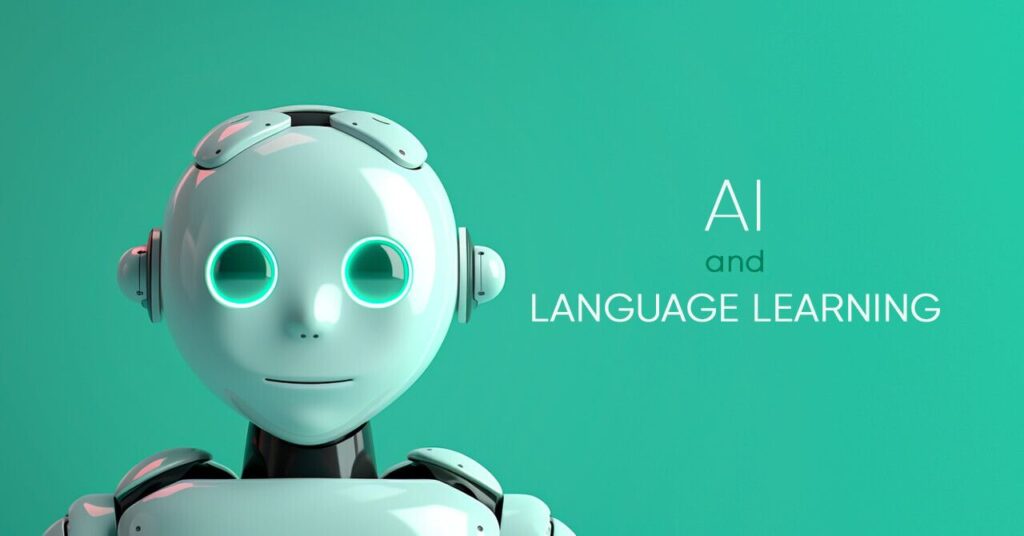
Finally, I would like to recommend some literature that has highly inspired me and helped me form critical opinions of the human mind and AI.
- “The Impact of Artificial Intelligence on Human Thought”- Rénald Gesnot
https://arxiv.org/abs/2508.16628
2. “Two languages in one mind: Insights into cognitive effects of bilingualism from
usage-based approaches”- Korenar, M.; Treffers-Daller, J.; Pliatsikas, C.
https://pure.uva.nl/ws/files/134456012/Two_languages_in_one_mind.pdf
3. “The Ideological Brain”- Leor Zmigrod
https://www.penguin.co.uk/books/460044/the-ideological-brain-by-zmigrod-leor/9781405975148
4. “The Psychology of Totalitarianism”-Mattias Desmet
https://abc.nl/book-details/the-psychology-of-totalitarianism/@9781645022756
PS: If anyone share the same interests, I am more than open to discussions and literature recommendations.