Technology has united the world and divided it as never before. Just think about how news from, for example, China, can travel almost as fast as light and reach millions, or even billions, of people in just a few days, or hours. Something that more than a century ago could not have even been imagined by our ancestors, but here we are.
Social media and its role in the globalized world
For this article, I will explore the phenomenon of ideological subversion, how susceptible Europe can be, and how media literacy can be used as a counterattack instrument to protect our young and fragile European democracies. Exploring the impact of globalization on the field of communication, I had the opportunity to interview Danique de Jong, a junior employee in crisis communication at BEX communicatie in the vibrant city of Eindhoven and gain useful insights.
My main curiosity was how globalization has affected communication; well, it has. And Danique spoke from her experience as a professional working in a vibrant international technology hub. “Every kind of news is diffusing more rapidly due to social media and therefore the capability of everyone to be a ‘journalist’: you see something, you film it and upload it on the internet, and it will only be a matter of time until you start a scandal that can be amplified and rapidly become international if the topic is relatable to other countries. Social media is a major factor in spreading news around the world more quickly than in the past. A good example could be the ‘Black Lives Matter’ movement that happened in the USA but rapidly spread all over the world and has become an important and sensitive topic.’’
But Social media is a double-edged sword: while it can help raise awareness of the world’s main issues, it is also used as an instrument to divide and alienate people, until there is no cohesion left. And that creates the perfect ground for external agents to amplify social issues as a means of spreading propaganda, dividing, and weakening democracy itself. These platforms are huge databases fed by users’ content and personal data, which are then sold to advertisers. Big Data and the information it provides allow the sorting of people into various categories, filtered to help advertisers and companies understand consumer desires and behaviors. This understanding results in algorithms that target individuals by showing them information that is likely to appeal to them. The algorithms end up creating the so-called “echo chambers”, a hostile environment in which people only consume content that is in accordance with their political beliefs, making them increasingly biased, as well as aggressive towards others who share different perspectives.
Ideological subversion and Europe’s susceptibility to it
Ideological subversion, also known as cognitive warfare, is unique in its ability to shape perceptions, values, and loyalties well before any visible confrontation occurs. A concise conceptual root of ideological subversion can be traced back to Sun Tzu’s The Art of War, which describes the highest form of warfare as achieving one’s political objectives without fighting. Ideological subversion is a four-step, overt, legal, and non-violent procedure.
“In this state, the target population no longer recognizes what interests it should defend, nor how to defend them. Individuals become unable to distinguish truth from propaganda, and even when confronted with factual evidence, their reactions are shaped by pre-programmed ideological responses.”- Yuri Bezmenov.
Phase 1: Demoralization (10-15 years)
This phase aims at reshaping an entire generation’s values through sustained psychological and informational manipulation. This is the most time-consuming step and involves exploiting a state’s existing internal tensions and amplifying them. Divisions are deepened, dissent is encouraged, and the ‘freedom of speech’, which lies at the base of each healthy democracy, is being abused as an instrument to perpetuate misinformation. Disinformation campaigns, propaganda, and political interference (external agents interfering in one state’s political landscape) are the best indicators. By the end of this phase, people are being fed so much information that they become unable to distinguish truth from lies, and widespread distrust begins to prevail among the population.
Phase 2: Destabilization (2-5 years)
This phase aims to target a society’s ability to function coherently. Since people’s perceptions are divided, it is harder for them to reach a consensus, which considerably slows the decision-making process. Corruption in one’s state institutions, economic dependencies, changes to the law, and espionage are among the more prevalent symptoms of this second phase.
Phase 3: Crisis (2 to 6 weeks)
The shorter but most intense phase. By this point, core institutions are no longer functioning, law enforcement is discredited, and civil society is strongly fragmented. This is the moment when society undermines change and reaches a point of no return: chaos becomes the environment, and fear becomes logic guiding behavior within society. The average citizen, yearning for stability, begins to accept the idea of a new governance, even authoritarian rule.
Phase 4: Normalization (Indefinite)
The last phase is the opposite of the demoralization phase: instead of encouraging a pluralist state, it punishes dissent and imposes uniformity. Stability, security, and sovereignty replace the once-present freedom of expression and diversity.
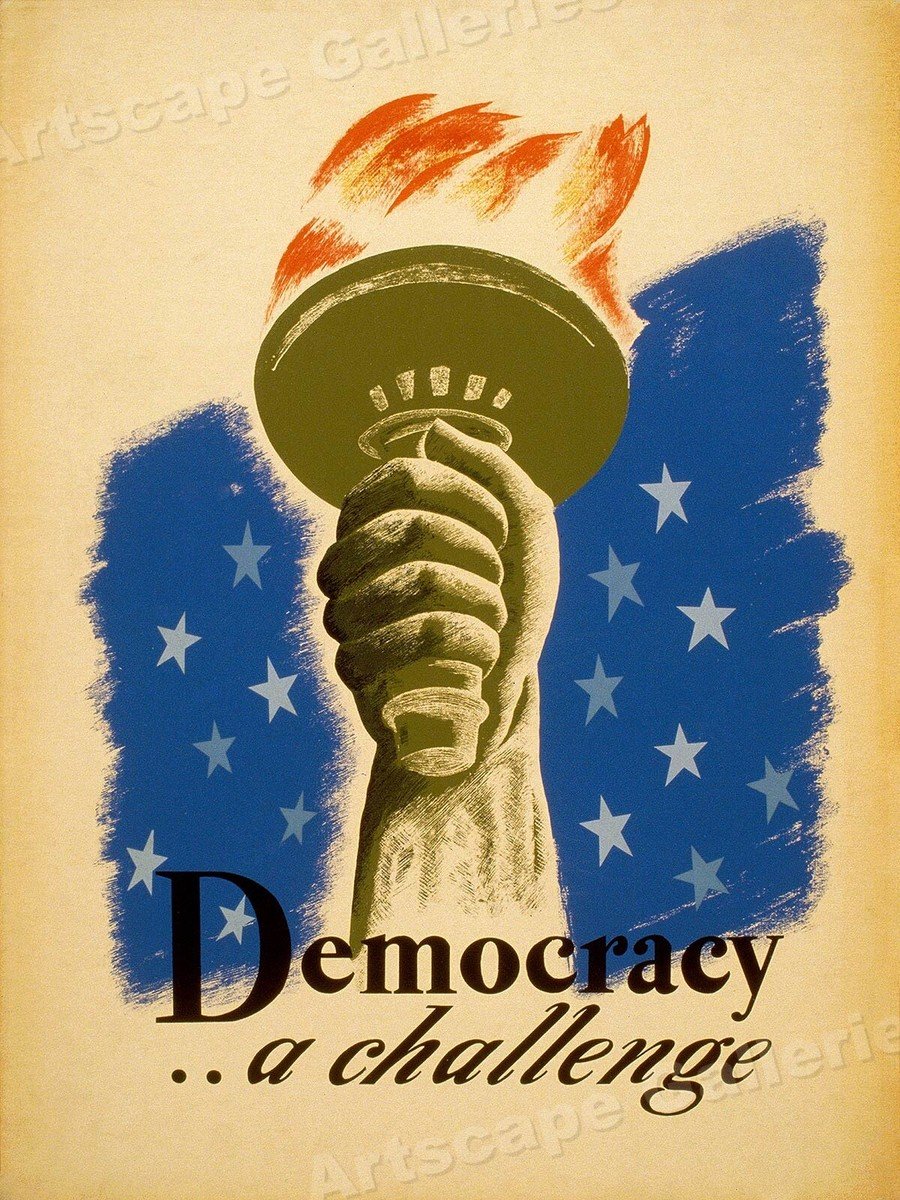
Now, any democracy is particularly susceptible to propaganda, and for that reason, two considerations support this: freedom of propaganda is essential to democracy, and states in which freedom of propaganda was granted have resulted in the destruction of democracy (Germany, Austria, Czechoslovakia). But what happens if democracy can’t exist without tolerating propaganda, which will inevitably result in the abolition of democracy? In other words, the definition of democracy is giving everyone the freedom to express their views, and if we end up limiting that, how are we any different from an authoritarian state?
Media literacy and its importance to maintaining a thriving democracy
Media literacy: the ability to access the media, to understand and critically evaluate different aspects of the media and media contexts, and to create communications in a variety of contexts. (European Commission,2021). To thrive in today’s world, people need strong skills in thinking critically about what they see and hear. Media, information, and digital literacies help individuals make informed decisions, participate in democracy, and better understand themselves and others. Being informed helps people participate in democracy: literacy enables them to evaluate political promises and make sense of the information presented. Literacy skills also help people understand their rights and responsibilities as voters. In a democratic country, people have the right to protest and speak out against injustice, but with so much information, how can we understand the true message behind it? Media and information literacy can help people look beyond the surface and ask critical questions: What is the message, who created it, and what evidence supports it?
No one is safe from becoming a victim of misinformation, no matter the education level, but here are some easy steps that could make us more conscious readers: get your news from multiple sources and outlets; if still in doubt, investigate and critically assess the credibility of the sources; support real experts who are distinguished in their field ( and even in the case of an expert, search further for other experts within the field), and when spotting the misinformation, try to address it and explain, supported by facts, why they are incorrect.
References
- Bezmenov, Y. (1984). Love letter to America. Almanack Press.
- Börzel, T. A., & Zürn, M. (2021). Contestations of the liberal script: A research agenda. International Theory, 13(2), 298–305.
- Dahl, R. A. (1989). Democracy and its critics. Yale University Press.
- de Jong, D. (2024). Personal communication on crisis communication, globalization, and social media dynamics [Personal interview]. BEX Communicatie, Eindhoven.
- European Commission. (2021). Media literacy in the EU. European Education Area. https://school-education.ec.europa.eu/en/discover/tutorials/importance-media-literacy-democracys-big-year
- Good Party. (n.d.-a). Ideological siloing: What it is and why it matters. Good Party. https://goodparty.org/political-terms/ideological-siloing
- Good Party. (n.d.-b). What is political polarization? Good Party. https://goodparty.org/blog/article/what-is-political-polarization
- Goebbels, J. (1935). Der Kongreß der NSDAP 1935. Zentralverlag der NSDAP.
- Grayling, A. C. (2017). Democracy and its crisis. Oneworld Publications.
- Idaho Humanities Council. (n.d.). How media literacy can help save democracy. Idaho Humanities Council. https://idahohumanities.org/speaker-topic/how-media-literacy-can-help-save-democracy/
- Krastev, I., & Holmes, S. (2019). The light that failed: A reckoning. Penguin Books.
- Lenin, V. I. (1975). The proletarian revolution and the renegade Kautsky. Progress Publishers. (Original work published 1918)
- Lerner, M. (1939). Ideas are weapons. The Sociological Review, 31(4), 438–440. https://journals.sagepub.com/doi/abs/10.1111/j.1467-954X.1939.tb02043.x
- National Library of Australia. (n.d.). Media literacy skills matter. Digital Classroom. https://www.library.gov.au/learn/digital-classroom/media-and-information-literacy/media-literacy-skills-matter
- NATO Strategic Communications Centre of Excellence. (2022). Media literacy as a strategic defense strategy for the transatlantic coalition [Policy report]. NATO StratCom COE.
- PoliticsGeo. (2023). Ideological subversion and the strategic logic of influence. PoliticsGeo. https://politicsgeo.com/ideological-subversion-and-the-strategic-logic-of-influence-2/
- Riley, D. (2010). The civic foundations of fascism in Europe: Italy, Spain, and Romania, 1870–1945. Verso Books.
- Sadurski, W. (2019). Poland’s constitutional breakdown. Oxford University Press.
- Sun Tzu. (1910). The art of war (L. Giles, Trans.). Luzac & Co.
- UNESCO. (2021). Media and information literacy: For the public good. UNESCO Publishing.
- UNICEF. (n.d.). A quick guide to spotting misinformation. UNICEF Europe and Central Asia. https://www.unicef.org/eca/stories/quick-guide-spotting-misinformation
- V-Dem Institute. (2023). Defiance in the face of autocratization: Democracy report 2023. University of Gothenburg.
- Wohlstetter, R. (1962). Pearl Harbor: Warning and decision. Stanford University Press.