
Introduction
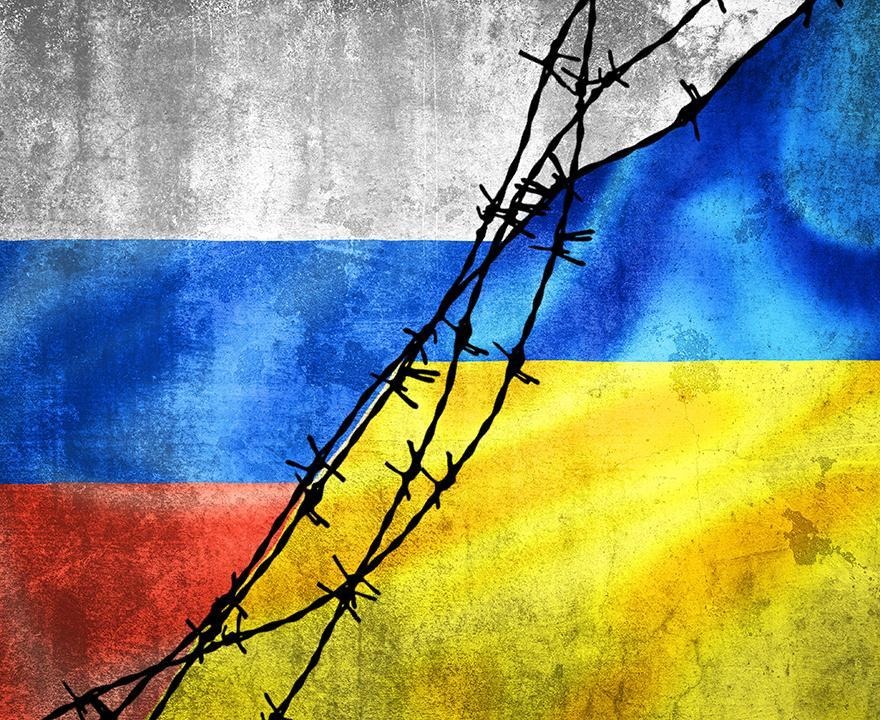
Russian occupation of Ukraine drags on, entering its fifth year, but global attention is more focused on the Middle East. Yet, the conflict remains of great importance, especially given the resources invested by the EU Countries and the danger to the international order if the result was to be a Russian Victory.
The peace attempts by United States President Donald Trump have failed and the conflict appears to have no end in sight and given the nature of the conflict, it can continue for years until one of the sides surrenders. The Ukrainian cause is especially more difficult to defend since the arrival of Donald Trump to power in the United States and the disregard for the International Rules established after the Second World War. Will the European States be the ones defending the international order or will they surrender to a world of great powers?
The answer is tricky to determine today, but we have some signals of some opposition to US politics in the Middle East by some European States (Spain, France, and others).
For the Russian side, the war is an even more pressing matter that justifies their irresolute position. The Kremlin maintains that the establishment of Western military bases on its border regions is unacceptable, as well as any entry of Ukraine into NATO or any Western military organization.
Within this context, we also have to address the NATO accession of a number of Eastern European countries in the last decades that infuriated the Kremlin, even if it is according to international law. Ultimately, this war is between two sides with very different and conflicting world views, the West versus Russia, each side maintaining their positions with their own perceived justifications and different sets of values. Below, I will outline the current state of affairs of both parties in the present day.
Russian Side
Officials in Russian regions that the Kremlin has historically sought to shield from the effects of the war in Ukraine are beginning to acknowledge the impacts of Ukrainian long-range drone strikes in the Russian rear. Leningrad Oblast Governor Alexander Drozdenko told the Leningrad Oblast regional assembly on April 15th that Leningrad Oblast has become a “frontline oblast,” explicitly noting recent Ukrainian strikes against “economic and port” facilities in the oblast. Ukraine’s recent successful long-range strike campaign against Russian port and oil infrastructure in Leningrad Oblast is likely forcing Russian regional authorities in areas deep in the rear to acknowledge the impact of Ukrainian strikes against critical infrastructure targets in Russia and Russia’s intensifying need to defend them.
Furthermore, there could be a new limited mobilisation to support Russian Forces defending the rearguard from Ukrainian Drone attacks. This was already put in force by the Ministry of Defense of the Russian Federation in October 2025, but with limited effects.
Popularity problems
The growing consequences suffered by the Russian population, due to the war in Ukraine, has created a new contestation against the Russian Government. The unrest, coupled with the new censorship wave regarding social media (particularly Telegram) as it was reported on February 10th of this year, the Russian Federal service for the supervision of Information, Roskomnadzor, began slowing down Telegram in favor of pushing the Max app created by the State majority owned company VK. The same is seen in regards to internet access and mobile network, the government justified this action as a response to recent Ukrainian attacks and questions of National Security.
Recent polls have revealed a notable decline in support for the President of Russia and his party (United Russia). Even in governmental polls, which are of doubtful accuracy, the downward trend is visible; VTsIOM reported 73% of support for the president in early March in comparison to 67% in early April. The Levada Center, one of the few independent polling organizations in Russia, revealed a similar pattern with 36% of the Russians being positive about the political situation in the country.
Military Situation
In recent months, we have been seeing a growing advancement of Russian Forces in comparison to the last few years of the conflict; however, Ukraine has halted the majority of the more recent advancements with counter-offensive operations. While these efforts have weakened some sectors of the line, Ukraine has successfully recovered some land in the south. Currently, the front has largely stalled due to Russian preparations for a new offensive later in the Spring.
The situation continues to be particularly difficult for the Ukrainian military as Russian forces continue to advance in the Donetsk region, putting more and more pressure, even if the majority of the assaults are made using infiltration tactics, to avoid unnecessary casualties and drone attacks. However, if Russia wants some more significant gains on the battlefield, it will be forced to use large groups of mechanized forces to support the advances.
The Ukrainian Side
The Ukrainian leadership is feeling mounting pressure on two fronts: on the diplomatic side, by the growing international attention to the Middle East and, on the military side, by the continuation of drone attacks on its territory that have been intensifying in the past few weeks and have increased the demand for air defense systems. In response, President Zelensky has sought international assistance to purchase and construct air defense systems, with support coming from Germany and Norway. On the financial front, the President of Ukraine is urging European countries to provide the promised 90 billion euro loan. It will receive(supposedly) the biggest drone delivery from the UK, 120 000 drones, possibly the biggest package to date. The 90 billion loan was being blocked by Hungary because Ukraine suspended the flow of Russian oil that went through the Druzhba pipeline and had Hungary and Slovakia as the main countries affected by this. However, with the recent Hungarian elections and the victory of a more pro-European and pro-Ukraine candidate, Péter Magyar, Ukraine expressed its desire to repair the Druzhba pipeline. The acting Prime Minister of Hungary, Viktor Orbán has also expressed his willingness to stop blocking the financial aid to Ukraine if Ukraine resumes the flow of oil. The recent Hungarian elections could be good news to Ukraine, in terms of securing more approval for financial packages from the EU.
Conclusion
The primary challenge for Europe lies in whether it can maintain its military support for Ukraine amidst the ongoing Middle East crisis. The continent has long relied on purchasing US weaponry, but these assets are increasingly being diverted to the State of Israel or utilized in operations against Iran. The crisis has also given more money to the Russian State, because of growing oil prices, even if it is temporary, it significantly complicates the geopolitical situation for the West.
While the Russian state is under more pressure than perhaps at any other point in its modern history, the Kremlin has demonstrated a resilient capacity for managing internal dissent. It appears determined to pursue the conflict until its strategic objectives are met, even if doing so eventually requires a limited mobilization that could spark domestic unrest. Conversely, the Ukrainian state remains in dire need of sustained financial and military assistance. While its financial outlook has become more secure thanks to robust European support, its military future is fraught with uncertainty and lack of definition.
Sources
Russian Offensive Campaign Assessment, April 17, 2026 | ISW;
Bloqueios da internet na Rússia abalam popularidade de Putin;
Ukraine Finally Got Battlefield Momentum. Now Comes a Russian Offensive. – The New York Times;
Ukraine’s Zelenskyy pursues more arms deals with allies against Russia | AP News;
Orbán signals readiness to approve €90B EU loan to Ukraine once Druzhba oil is flowing – POLITICO;