Politics has always been a big part of the Romanian identity. My very first encounter with it, and with freedom of speech, was watching my family at every gathering, throwing criticism left and right about “the system”. It’s one of the first things I learned growing up: to speak up, because at one point, not too long ago, I wouldn’t have been able to.
People rarely go into detail about the years of communism; it’s nothing more than fragments overheard by chance, as if the same secrecy that marked those years still lingers in the corners of every house. And yet communism has haunted every moment since its fall. By the time I was old enough to vote, I had offhandedly heard stories about corruption, economic collapse, and the concept of diaspora. The first democratic election is now called “Blind Man’s Sunday”. In May of 1990, almost the entire country lined up to vote with the kind of faith that only the promise of a better future could give them. With the highest percentage in our country’s democratic history, they elected the man who had come up as part of the communist party. At the time, the people believed in his charisma and his party’s influence, and went on to elect him once more.
Almost forty years later, and Romania is still split between those who have been disappointed one time too many and those still holding onto the hope from the revolution. Where do young people fit, voting for the first time?
The presidential elections of 2024 kicked off with 14 candidates and the expectation of two rounds to determine the future of the country. The surprising win of hard-right candidate Călin Georgescu in the first round was quickly followed by suspicions of interference through the use of a TikTok campaign. The uncertainty scared Brussels officials. In early December 2024, the POLITICO headline read “Romanian court cancels presidential election amid Russian influence fears” marking another day of Romania’s feature in the international news. If 1990 was named after the blind, what will 2024 be? A narrow miss, a disregard for the rules? It became less about the candidates and more about our identity as a nation.
In a country already untrusting of its leaders, this kind of decision added more fuel to the fire. What followed next were police raids, the involvement of European courts, the current president’s resignation, and many, many public opinions. Abroad, nostalgia crept in harder than ever before, for the language, for the culture, for the people recalling history in Bucharest’s University Square. Protests broke out once Călin Georgescu was banned from running in the new round.
Ironically enough, the Romanian diaspora from Western Europe voted overwhelmingly for the far-right. Even now, with the centrist mayor of Bucharest as the sitting president, most Romanians abroad are advocates for ‘a sovereign nation’. I’m part of that community now, 5–6 million strong, the biggest one in Europe. Go to the West, and you’re likely to find a Romanian at every corner. Never too far from home, and yet the majority would give it all up and go back to the past, closer to 1990 or even before. It seemed unreasonable to me, at first.
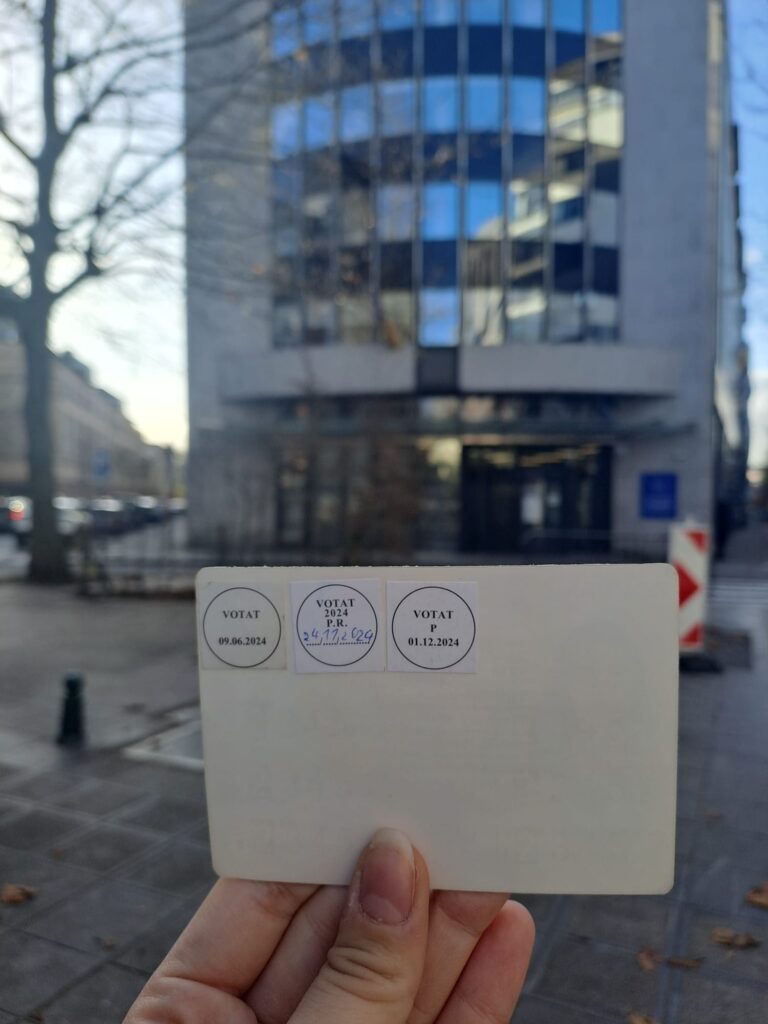
Upon closer inspection, some things made sense. It was my choice to study abroad, but for so many others leaving was a sacrifice. Either because of low wages, lack of overall work in their field, or searching for better conditions, something pushed them out. Where my homesickness was blunt, theirs had teeth that sank in further the more they had to integrate in a foreign country. Somewhere along the way, the European pride that made people dance in the streets in 2007 had gotten lost, like our resources, our history, and our belief in a government that tries to solve issues only on paper. Voting has always reflected that, either by people’s choices or them just not showing up.
The European ‘dream’ was always about freedom. Freedom to move, freedom to trade, freedom to express yourself, and to be included. Differences were meant to be celebrated, cultures meant to be shared. There’s a higher level now, a space to constantly work for this dream and to welcome new differences, new cultures.
Inclusion is a difficult goal to achieve, however, when so many lose trust in others. That’s the present state of my country and of so many others. The future is and should be European, and it starts not from the highest level but from any person. United Citizens of Europe embodies that mission well, because change really does start from the ground up, and so does hope.
The 2024 election was unexpected for everyone, both nationally and internationally. In the end, it was a win for hope and a wake-up call about the people abroad. What is there to be done now, but work even harder towards that European future? With the far-right movement haunting every corner that our years under communism have, politics seems to keep defining us. We’re never too far from home, but if the future is European, then we’ll be able to make a home no matter where the borders lie.
So well said! Wonderfully written article!!!