
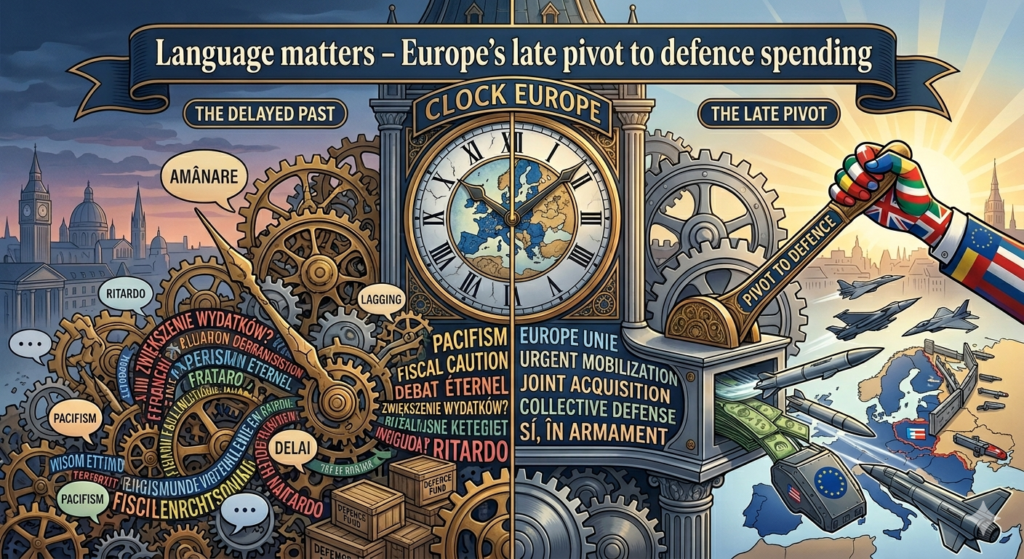
After the ideological struggle of the second half of the 20th century resulted in a victory for liberal democracy over communist regimes, the justification for maintaining the same level of military spending among the now-victorious nations has greatly diminished. Considering they no longer had adversaries regarding security affairs, many European governments cut the budgets allocated to the armed forces and redirected those funds to areas of the economy such as social spending and civilian infrastructure.
Criticism of how Europeans approach the military sector has been frequent from the United States. After the fall of the USSR, the first disagreements among leaders emerged on various occasions, but I would say that the moment when American officials felt seriously frustrated for the first time regarding the allied position was observed during the War in Yugoslavia. Unlike today, these conflicting views were expressed through diplomatic channels, but the point I am making today is that all such efforts have largely failed.
Despite exhausting a good number of diplomatic calls, the Americans were unable to convince Europe to change the way it uses its armed forces and their budgets. The reasons why European leaders approached the issue differently are varied, such a position was understandable, the Cold War had ended, and the global focus was no longer over armed conflicts and arms races. Also, there were suspicions that these demands were actually a hidden plan to get NATO member states to pay more for American military equipment.
Even after 9/11 and the War on Terror, European defense budgets remained stagnant. Following the 2008 financial crisis, we faced yet another wave of budget cuts, all while the Obama administration had officially launched the famous “Pivot to Asia,” which should have “woken up” politicians here to the fact that we need to take our defense into our own hands. It is true that the United States never wanted a European army either, but rather for all these changes to take place under NATO command, where the U.S. holds strong influence.
After all we were the ones who were wrong, because even after the 2014 invasion of Crimea, things didn’t really change, I would go further and say that Western European countries did not take this issue seriously even when Russian troops had begun their invasion of Ukraine, the only countries that took this threat even slightly seriously were those on NATO’s eastern border. Eastern European diplomats made a series of efforts to convince the other countries that the danger extends beyond this flank and that everyone would suffer if they did not take immediate action, but their warnings were avoided until yet another war had broken out on the continent. It took a terrible war that continues to this day and an American president whose morality is in question to bring us back to reality.
The rhetoric that led Americans to believe they could push Europe toward a different military approach failed during the war in the former Yugoslavia. The point officials made was that it wasn’t worth trading NATO for Bosnia, and this reflected that the leaders at the time understood the role of alliances and friendships all over the globe, many of which were forged after World War II. Today, things are different, political leaders in Washington have a much more transactional approach, and in their view, the purpose of traditional alliances is already outdated. When I say “language” I don’t mean just words, but more about the diplomatic approach used, it would have been good for us if Washington could have somehow pushed other countries to take defense seriously.
Obviously, today it’s not diplomacy that’s driving the increase in defense budgets, but the constant threat of the entire alliance being close to its breaking point. We see how Mark Rutte has to act carefully with Trump every time and avoid upsetting him. Surely it takes a lot of patience to do that, so, we should send Mark some congratulations for handling this horrible job, but many of these diplomatic humiliations, such as JD Vance’s moment in Munich when he spoke about the true enemy within could have been avoided if those who blame us today had overcome their desire to keep the continent under control and had pushed us toward integration sooner. The language ignored back then has become today’s real risk and we are all paying the price because we failed to imagine a world in which the U.S. is no longer a stable provider of security and democracy in the world. It remains to be seen how things will unfold, but it would have been nice if we had some of the current headaches earlier when the world was more peaceful and united, not now, at a time when liberal democracies are facing their most dangerous moment since the second half of the 20th century.
References
Military expenditure (% of GDP) – European Union | Data
US defence chief blasts Europe over Nato | Nato | The Guardian
BEHIND U.S. POLICY SHIFT ON BOSNIA: STRAINS IN NATO – The Washington Post
David Cameron was distracted during Libya crisis, says Barack Obama | Barack Obama | The Guardian