
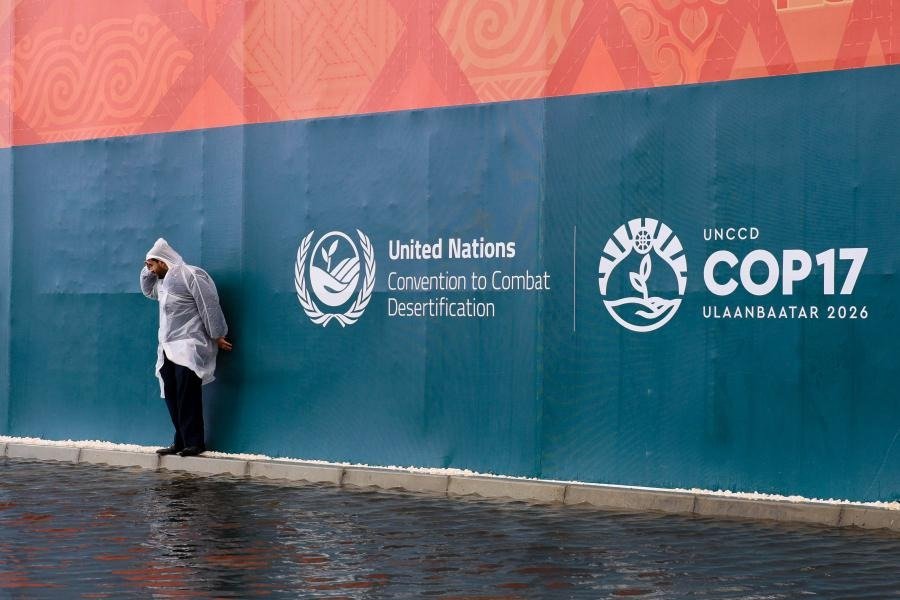
There is a photograph circulating this month that captures something Central Europe has never had to reckon with before: a 1937 freight vessel, submerged for eight decades beneath the Danube near Novi Sad, standing exposed on dry riverbed under an unrelenting August sun. A few hundred kilometres upstream, in Budapest, the river that has defined the city’s identity since Roman times fell to a historic low of 23 centimetres in late July, then kept falling. This is not a metaphor. It is measurement. And it arrives in the same month that the seventeenth Conference of the Parties to the UN Convention to Combat Desertification convenes in Ulaanbaatar, Mongolia, under the theme “Restoring Land, Restoring Hope”. The juxtaposition should trouble every policymaker and citizen in this region. Desertification, in the imagination of most Central Europeans, is a phenomenon of the Sahel, of Central Asia, of places far away and dry by nature. The Danube’s summer has just demonstrated otherwise.

An emergency written in water level
The scale of what unfolded across the Danube basin this July and August resists understatement. The European Commission’s Joint Research Centre confirmed that drought conditions across central and eastern Europe deteriorated sharply through the summer, with alert-level conditions affecting Hungary, Romania, Austria, Czechia, and Slovakia simultaneously, driven by severe and prolonged precipitation deficits compounded by extreme heat. Soil moisture and river flow across the region fell below normal thresholds, with measurable consequences for crop yields and vegetation health. Satellite imagery released in mid-August showed not only the Danube but the Rhine, the Po, and the Loire running at historic lows in parallel — a continental pattern, not a localised anomaly.
The human and infrastructural consequences arrived swiftly and were severe. Hungary’s Paks Nuclear Power Plant, which supplies nearly half of the country’s electricity, was forced toward a near-complete shutdown for the first time in its forty-four-year operating history, because the reactors depend on Danube water for cooling. Romania declared a state of emergency and deployed 180 kilograms of explosives to blast rock formations diverting water toward its Cernavoda nuclear facility, later constructing an improvised dike from sunken, rock-filled barges to keep cooling water flowing. Serbia’s Djerdap hydroelectric complex, which under normal conditions supplies close to a fifth of the country’s electricity, dropped to a fraction of its capacity. The European Commission signalled readiness to convene emergency electricity talks as the crisis threatened cross-border grid stability.
Desertification is not only a southern question
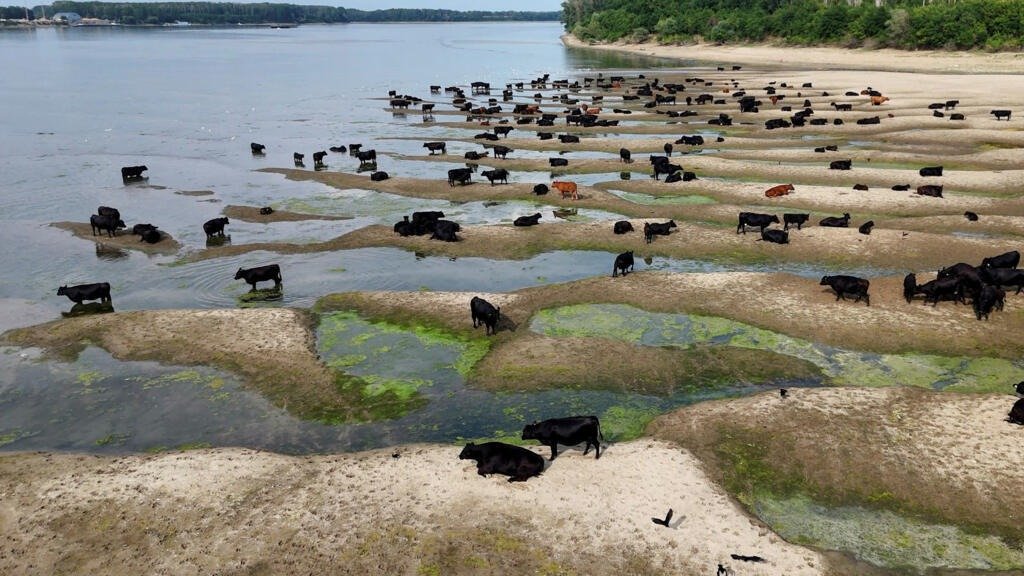
The UNCCD’s own indicators — soil moisture deficit, vegetation stress, land productivity decline, aridity trend — are precisely the markers now visible across river basins that Europeans have long assumed were climatically secure. The European Environment Agency has, for years, mapped sensitivity to desertification and drought extending into parts of the continent well beyond the Mediterranean fringe traditionally associated with the term. What the summer of 2026 has done is compress a slow-moving statistical trend into an undeniable, lived emergency: nuclear reactors idled, riverine cargo grounded, agricultural yields threatened, and cities confronting water infrastructure planned for a climate that no longer exists.
This distinction matters for how Central European institutions engage with COP17. If desertification is understood narrowly as a phenomenon of drylands in the Global South, then the policy instruments, funding mechanisms, and diplomatic urgency built around the Convention will continue to treat river basin degradation in the Danube corridor as an adjacent, secondary concern — worthy of adaptation funding, perhaps, but not of the structural land-water governance reform the Convention was designed to drive. The evidence from this summer argues for a different posture. Land degradation neutrality, the central operational target of the UNCCD framework, cannot be pursued in isolation from river basin hydrology, particularly in a region where an entire continent’s energy security has just been shown to hinge on a single waterway’s flow rate.
The institutional gap
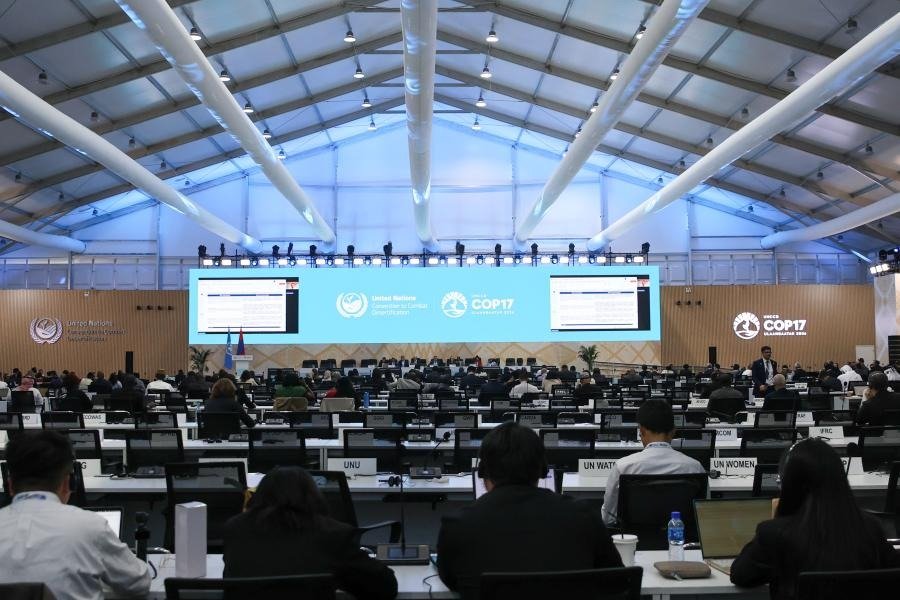
Photo: International Institute for Sustainable Development (IISD)
Herein lies the uncomfortable finding that should animate this article, and animate the advocacy of every young person engaged with these institutions: Central European governments do not, at present, frame their national interest in explicitly UNCCD terms. Desertification diplomacy has historically been the province of foreign ministries managing development cooperation portfolios, not energy ministries managing nuclear cooling water, and not environment ministries managing Danube basin strategy. The Paks and Cernavoda crises exposed a policy silo: energy security planning proceeded for decades without meaningful integration of long-term hydrological degradation projections, precisely the kind of cross-sectoral foresight the UNCCD’s land-water nexus agenda is meant to institutionalise.
What was learned through direct engagement with youth consultation mechanisms within the UN system is that the path from local civic observation to formal negotiating positions is not automatic, but it is a long time with inclusive participation and young empowerment. Young advocates in Budapest, Vienna, and Bratislava need to understand how national delegations to UNCCD COP sessions are formed, how land degradation neutrality targets are reported under Sustainable Development Goal indicator 15.3.1, and how a river basin drought becomes a line item in a national voluntary target. That translation, from lived crisis to institutional language, is what converts an observed emergency into an actionable mandate.
A policy proposal for the Danube basin
Three concrete steps merit consideration by Central European governments and by the youth networks advocating within this space. First, Danube basin states should formally integrate river basin drought and low-flow indicators into their UNCCD national reporting frameworks, moving desertification diplomacy beyond a Global South-facing development portfolio and into domestic energy and water security planning. Second, the International Commission for the Protection of the Danube River, alongside the EU Strategy for the Danube Region, should establish a standing dialogue with UNCCD technical bodies, ensuring that land degradation neutrality targets account explicitly for transboundary river hydrology rather than treating land and water as separate governance tracks. Third, youth delegations attending future Conference of the Parties sessions from Central European states should be equipped with basin-specific data — cooling water dependencies, hydropower vulnerabilities, agricultural exposure — that make the region’s stake in desertification policy legible to a global audience still inclined to view the Convention through a drylands lens alone.
The Danube’s low-water mark this summer will recede, and the river will rise again with autumn rains. But the institutional memory of a nuclear plant forced dark by drought, and of a decades-old wreck surfacing from a riverbed, should not recede with it. Restoring land, the theme chosen for Ulaanbaatar this year, must be understood in Central Europe not as a distant aspiration but as an immediate and local obligation.
Minh Trung Doan is based in Budapest, Hungary. He is the Founder and Coordinator of the Danube Youth Climate Hub, a Young Ocean Advocate within the Youth4Ocean Forum, and a CYMG delegate at UNEA-7. He serves as Local Ambassador for Hungary and Central Europe at United Citizens of Europe.